 By Justin Hill
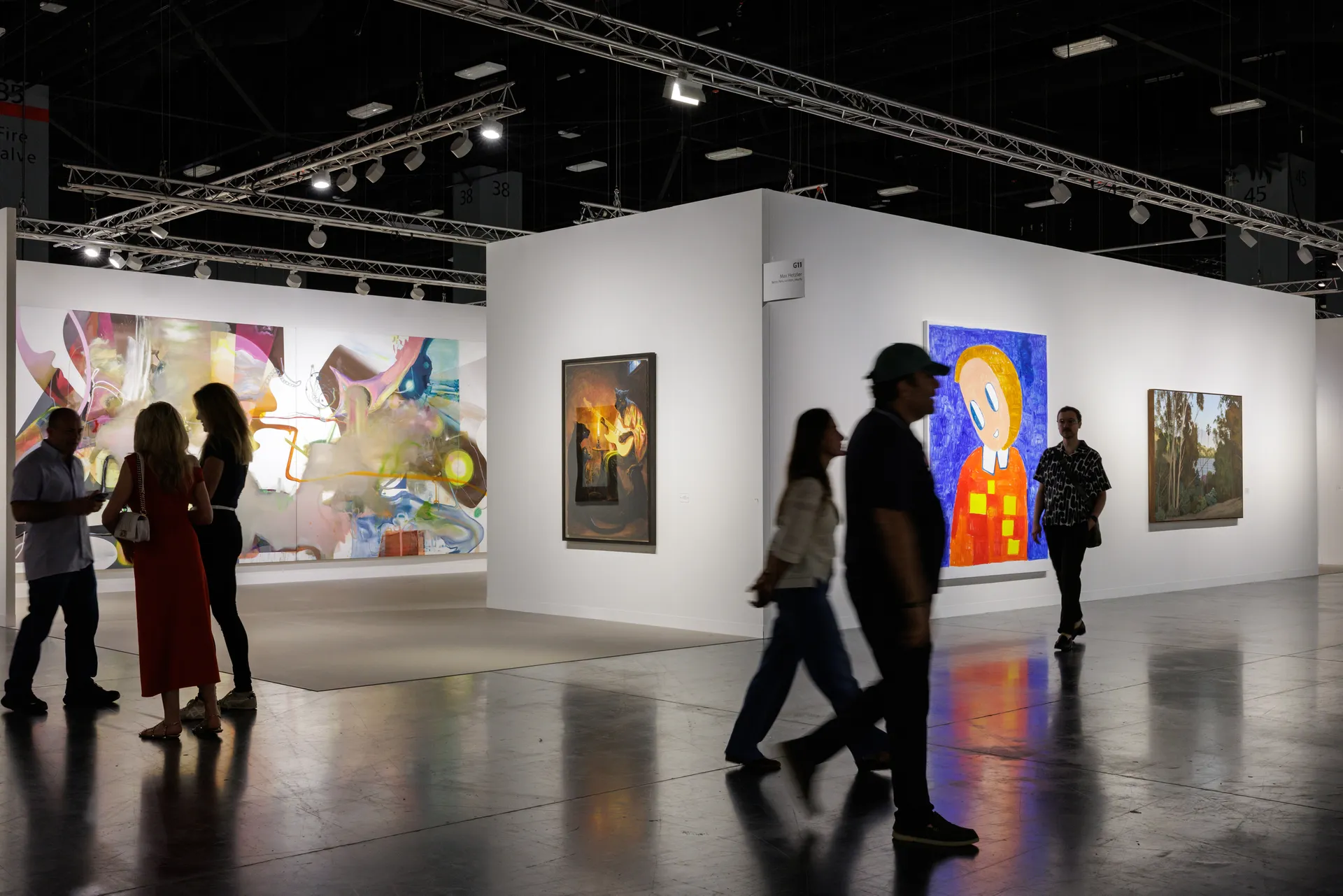
Art Basel Miami Beach has introduced Meridians, a new sector intended for work that extends beyond the limits of a conventional fair booth. Its debut at the eighteenth edition gives galleries another format for presenting ambitious projects within the event.
The change addresses a practical issue in art-fair design. A booth offers concentration and clear boundaries, but not every work benefits from those dimensions. Large installations and other spatially demanding projects need a setting in which scale can be part of the encounter rather than a problem to solve.
Scale changes the questions an art fair can ask
A conventional booth places practical limits on the size and arrangement of work. A presentation conceived for another scale may require more space around it, a longer viewing distance or a different relationship to the movement of visitors. Meridians creates a named format for those possibilities.
That change is more specific than simply making a fair larger. It gives galleries another way to present projects whose ambitions are not easily communicated through a standard booth arrangement. The viewing conditions become part of how the work is understood.
For audiences, the new sector provides a reason to consider the relationship between an object and its setting. Does the work ask the viewer to move, remain at a distance or spend more time than a quick pass allows? Such questions make the sector useful as a way of looking, not merely another stop to mark off on the fair map.
Meridians therefore changes the visitor’s rhythm as well as the floor plan. It creates opportunities to move from compact gallery presentations into a different kind of space. As this year’s fair closes, the new sector stands out as an attempt to broaden what can be shown within the marketplace while retaining the concentrated experience that brings audiences to Art Basel.