 By Justin Hill
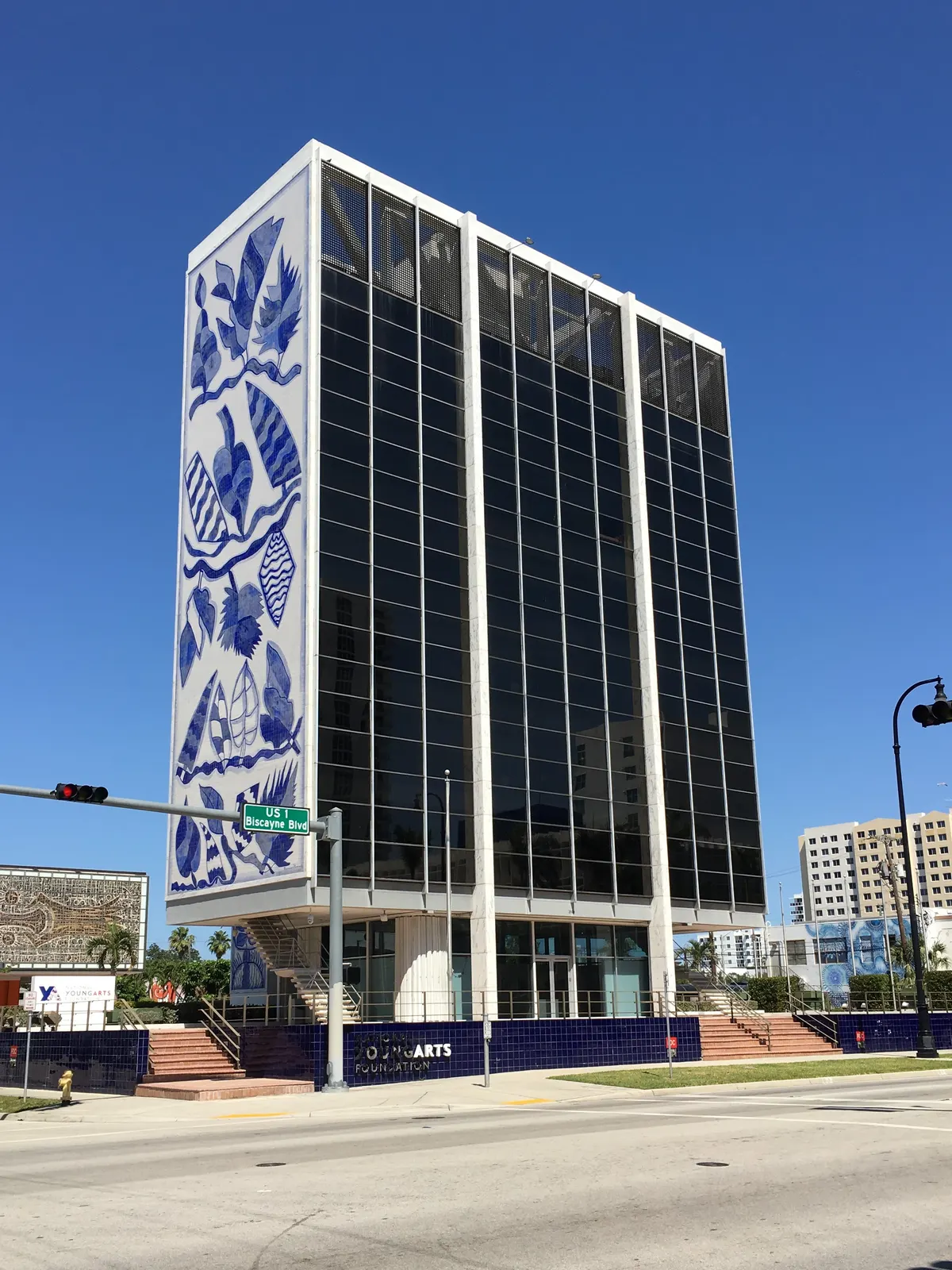
The National YoungArts Foundation has acquired the landmark Bacardi complex on Biscayne Boulevard. Announced October 3, the move gives the arts organization a distinctive Miami home and brings a new cultural purpose to a group of buildings already familiar in the city’s architectural landscape.
The blue-and-white tile and stained-glass structures make this more than a routine change of office address. Their visibility gives YoungArts a public presence, while the transfer connects a recognizable piece of Miami’s corporate history with support for emerging artistic talent.
Reusing a landmark can connect different chapters of a city
The Bacardi complex already has a visible identity through its tile and stained-glass elements. YoungArts' acquisition brings a new institutional purpose to that existing architecture, allowing the site's next chapter to retain a relationship with its earlier one.
That approach differs from constructing a cultural building on an empty site. The organization inherits a place people may already recognize, while future use will determine how the public understands it in an arts context.
The acquisition should not be confused with the completion of every planned activity. It establishes ownership and a new direction, with the campus's continuing development still ahead. For Miami, the immediate importance is the connection between a landmark property and an organization supporting emerging artists, demonstrating how an existing part of the city's fabric can acquire another cultural role.
The acquisition is a starting point, not a completed account of everything the campus will become. Its immediate importance is the match between an arts institution and a place with an identity of its own. In a city where new cultural buildings attract much of the attention, this project makes a case for the possibilities already present in an existing landmark.